
Today’s post comes from my now retired blog “A Place for People.” I hope you enjoy reading my thought from 5 years ago about city planning.
Recently I finished reading a new book title “Diary of a Mad Planner” by Robert Snetsinger. This book talks about his personal experiences of being involved with city planning in his town with the many issues that come up. And even though it was released in 1976 I still find it to be extremely relevant to the planning issues of today.
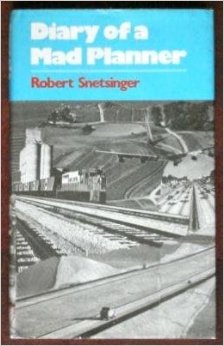
The front cover of “Diary of a Mad Planner”
What Snetsinger points out is that,
“Most of the public responses to planning are emotional rather than rational. If a piece of land has not been developed, no one concerns themselves. However, when the trees are removed and the construction of a gas station commences on this piece of land, all the neighbors object, even if the style of the service station was designed to match the neighborhood.”
Then Snetsinger shares this statement where he says that,
“What planners fail to do is visualize different future alternatives for the public. A colored map denoting C-1 doesn’t mean much to most people. However, if you selected the worst possible enterprises – like a stockyard or a buffalo chip embalmer – and indicated that such enterprises could be placed next to their $60,000 home, then maybe someone would understand.”
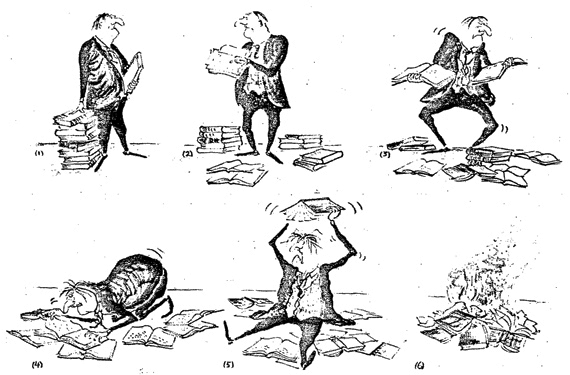
The frustrations over understanding zoning regulations portrayed by a planner. If it is frustrating for him to understand, how much more so for the uneducated general public?
What the public needs is clear, straightforward descriptions of what could possibly happen in their area to help and avoid these sudden emotional responses. This is not to say that their can not be emotional responses to what land is used for, but unless we educate the public on planning issues we will continue to face the same issues that Snetsinger saw back in the 1970’s.
Lastly, after talking about a longing for people to care for others with the planning decisions that are made the book with a speech similar to Martin Luther King Juniors I have a dream speech.
Snetsinger says,
“…I will dream of a time when land is no longer merchandise, but has a bill of rights to protect it from exploitation, when cities are again centers of the higher arts and the good life, when builders understand the physical, biological, and artistic properties of their construction materials, when truck drivers own library cards, public meetings are well attended, and politicians are not all lawyers. Buildings will be designed by architectural firms that have consulting janitors, policemen, window washers, pest-control operators, and firemen on their staffs, Sidewalks will be poured with a slope, so that water from melting snow will run off, and biologists will help to design and plan cities.
Then some bright May morning my daughter’s family will pack a picnic lunch and travel by bicycle to visit a field of yellow lady’s slippers. Her family will not have to approach the field secretively for fear of exposing these flower gems to ignoble plant collectors or other ignotamuses. The field of orchids will be protected from land developers, because all the citizenry of the community will recognize that a field of orchids is more valuable than thirty home sites. No hose lover would dare canter his mare here nor would a park director dream of constructing a baseball field near this site. Even the highway engineer dare not intrude, because all of America is a community of lady’s slipper lovers.”

Do we value beautiful land the way Snetsinger does? Do we truly value protecting it for all people?
A place for people is one where the community comes together and sees a higher value in great places for it’s citizens and Snetsinger’s vision in this book is one that continues to motivate me to work towards creating great places for people.

 Sutherland Maps


